Detailing
Window Tint in Casablanca: Films, Shades and the Rules
Everything to know before tinting your car windows in Casablanca: the four film technologies, how darkness is measured, why the rules matter for the windscreen and front windows, and the aftercare.
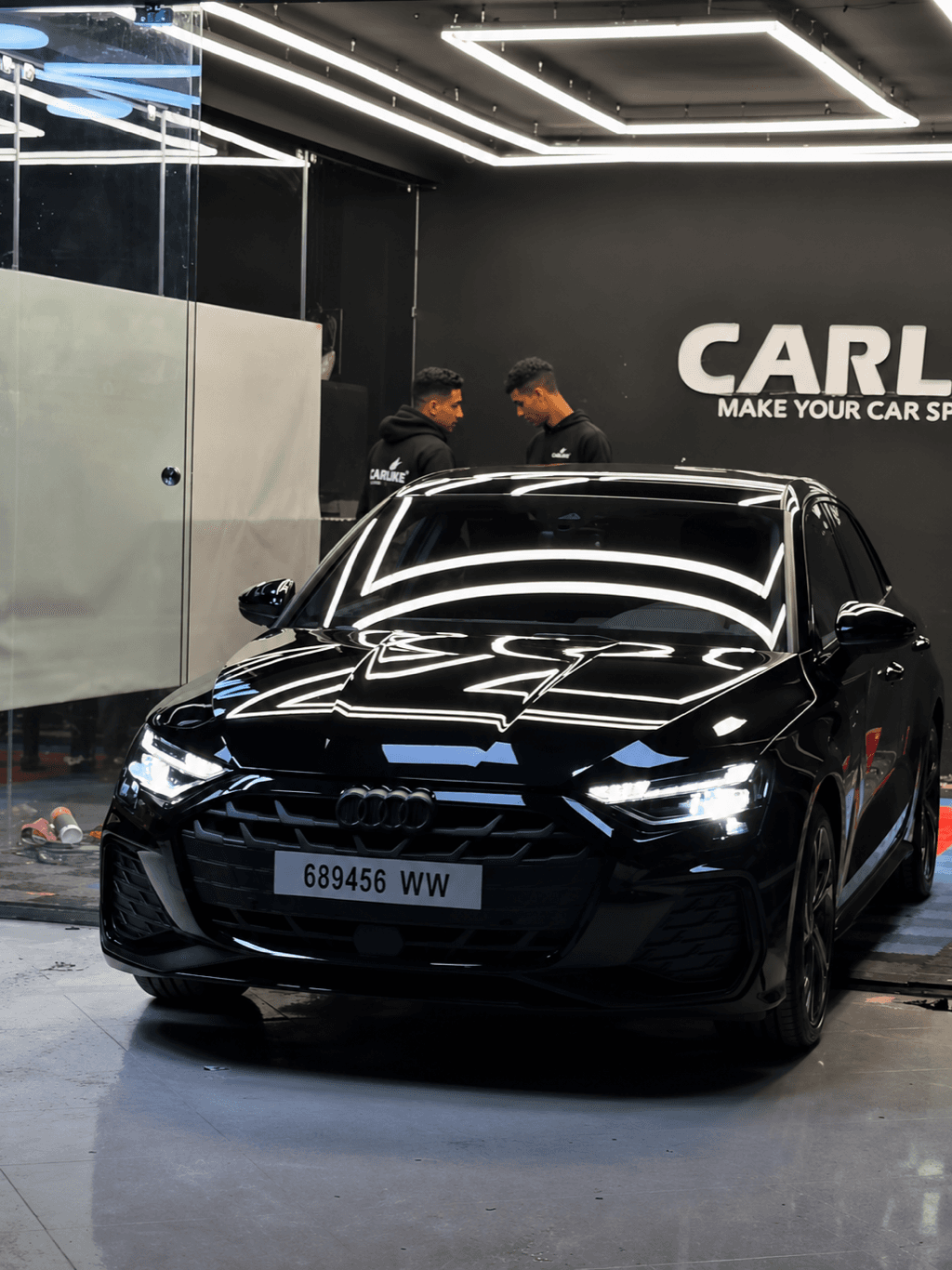
Window tint in Casablanca means fitting a thin tinted film to the inside of a car’s windows to cut heat, glare and ultraviolet light and to add privacy. At Carlike Maroc in Casablanca, window tint with homologated films starts from 1,200 MAD, in several intensities. Because Moroccan regulations limit how dark car windows may be tinted — especially the windscreen and the front side windows — the shade for each window is chosen with you after checking the current rules.
In Morocco most people ask for “vitres teintées” or simply “fumé”, and in Darija “fimi”. Whatever you call it, the questions are the same: which film, how dark, is it allowed, and how will it hold up in the Casablanca sun? This guide answers each one plainly.
What window tint is, and why it matters in Casablanca
Window tint is a thin, multi-layer polyester film with an adhesive side, applied to the inner face of the glass and cut to the exact shape of each window. Depending on how it is made, it absorbs or reflects part of the sun’s heat and light. Window film is also used on buildings; the automotive version is designed to follow curved glass and withstand daily use.
In a city like Casablanca, the benefits are practical rather than cosmetic:
- Heat. A car parked in the sun turns into an oven by early afternoon from late spring to autumn; a good film reduces the heat that builds up in the cabin and helps the air conditioning cope.
- Glare. Low sun on the Corniche or on the motorway at the end of the day is tiring; tint softens it.
- UV. Quality films filter out most ultraviolet radiation, which protects skin on long drives and slows the fading and cracking of leather, plastics and dashboards.
- Privacy and security. Bags, laptops and shopping are less visible from the pavement or in a car park.
- Safety. A film bonded to the glass can help hold fragments together if a window breaks.
Types of window film compared
Not all tint is made the same way. Four technologies cover most of the market:
| Film type | How it works | Heat reduction | Points to know |
|---|---|---|---|
| Dyed | A dye layer absorbs light | Basic | Cheapest; can fade or change colour over the years |
| Metallised | Metal particles reflect heat | Good | Shiny look; can interfere with GPS, phone or radio signals |
| Carbon | Carbon particles absorb infrared | Good | Matte, deep black look; stable colour |
| Ceramic (nano-ceramic) | Ceramic particles block infrared | Very good | No signal interference; reduces heat even in lighter shades |
The last row matters most in Morocco: with a ceramic film, heat rejection does not depend only on darkness, so a lighter shade can still keep the cabin noticeably cooler. Which technology suits your car, your budget and your daily use is discussed at the visit.
Shades and intensity: how darkness is measured
Window film darkness is expressed as visible light transmission (VLT): the share of visible light that passes through the glass and the film together. The lower the figure, the darker the window. Three practical points follow:
- Glass and film add up. Many cars, especially SUVs, already have factory-tinted rear glass. A film on top makes the result darker than the film’s own label suggests.
- Darker is not automatically cooler. Heat rejection depends on the film technology as much as on the shade.
- Night visibility drops with darkness. A very dark film makes reversing and manoeuvring in a dim car park or an unlit street harder — and the windscreen and front side windows are the ones the driver relies on most.
| Intensity | Look from outside | Privacy | Visibility from inside at night |
|---|---|---|---|
| Light | Barely changes the car’s look | Low | Almost unchanged |
| Medium | Clearly tinted, interior visible up close | Moderate | Slightly reduced |
| Dark | Interior hard to see | High | Noticeably reduced |
Window tint rules in Morocco
This is the part to get right before anything is fitted. Moroccan regulations limit how dark car windows may be tinted, especially on the windscreen and the front side windows, which the driver needs for a clear view of the road. The rules should be checked before fitting: NARSA, the national road safety agency, is the authority to consult on vehicle and road safety questions.
In practice:
- Check the current rules first. Regulations and the way they are applied can change; rely on the official source, not on what a friend’s car has.
- Let the studio advise the intensity. At Carlike Maroc, the team recommends an intensity for each window in line with the current rules and your needs, and fits homologated films (“films homologués”).
- Think front and rear separately. Owners often want more privacy at the rear for passengers and luggage, while at the front visibility comes first; the combination for your car is agreed at the visit, within the rules.
- Keep your invoice. It records which film was fitted on your car.
Why this guide quotes no percentage. You will find plenty of figures online presented as “the legal limit”. We deliberately do not repeat any of them: the rules should be checked with the authorities before fitting, and the studio advises the right intensity for each window of your car at the visit.
Window tint price in Casablanca
At Carlike Maroc, window tint starts from 1,200 MAD. The final price depends on:
- The number and size of the windows. A three-door hatchback and a seven-seat SUV are very different jobs.
- The shape of the glass. Strongly curved rear screens take longer to shape the film to.
- The film technology and intensity you choose together.
- Old tint to remove. Peeling, bubbled or purple film has to come off, and its adhesive cleaned away, before new film goes on.
Tint is often booked alongside other detailing work. The live price list shows every service with its starting price, including ceramic coating from 3,500 MAD and interior detailing from 900 MAD.
How tint is fitted, and the first days after
In the studio
- Inspection and choice. The glass is checked for chips and old film, and the film type and intensity are agreed window by window.
- Glass preparation. The inner face of each window is cleaned meticulously; a single grain of dust under the film shows as a bump.
- Cutting and shaping. The film is cut to each window and, on curved glass, heat-shaped so it lies perfectly flat.
- Application. The film is laid on the inner face with a slip solution, positioned, then squeegeed to push the water out.
- Finishing. Edges are checked and the car is inspected under strong light before handover.
The work takes place in the closed, controlled indoor studio, away from wind-blown dust — which matters more for tint than for almost anything else. The time needed depends on the car and is confirmed when you book.
Aftercare
- Keep the windows up for the first days. The adhesive needs time to cure; the team tells you exactly how long.
- A light haze or small water pockets are normal at first. They fade as the remaining moisture evaporates, usually faster in warm weather.
- Clean gently. Use a soft microfibre cloth and a glass cleaner without ammonia, which can damage some films.
- Respect the rear demister. The film covers the heating lines on the inside; never scrape the rear screen with anything sharp.
- Mind seatbelt buckles and rings, which can scratch the film when they knock against the glass.
Tint, ceramic and PPF: one comfort package
Window tint is often combined with other work in the same visit. A ceramic coating keeps the paintwork glossy and easy to wash in the dust; interior PPF, from 2,500 MAD, protects screens and piano-black trim from scratches; and for stone chips, nothing replaces paint protection film on the bodywork. If you are comparing studios for PPF Casablanca — searched in French as “film de protection de peinture” or “PPF Maroc” — the PPF finishes and packages page sets out the options, and our car detailing guide for Casablanca shows how every service fits into one plan. For a colour change, a car wrap completes the look.
Key takeaways
- Window tint is a thin film applied to the inside of the glass to reduce heat, glare and UV and to add privacy.
- At Carlike Maroc in Casablanca, homologated window tint starts from 1,200 MAD, in several intensities.
- Moroccan regulations limit tint darkness, especially on the windscreen and front side windows: check the current rules (NARSA) before fitting, and let the studio advise the intensity.
- Film technology matters as much as darkness: ceramic films can reduce heat even in lighter shades.
- Keep the windows closed for the first days and clean the film gently, with a cleaner without ammonia.
Book your window tint in Casablanca
The studio is in Casablanca’s Jnane Californie area, on boulevard Ed Daouha, open by appointment Monday to Saturday from 10:00 to 21:00. Send a photo of your car on WhatsApp or leave your name and phone number in the short booking form; the team calls you back, checks the glass with you at the visit and advises the right film and intensity for each window. You can browse all the detailing services online, and the FAQ answers the most common questions before you come.
Frequently asked questions
At Carlike Maroc in Casablanca, window tint with homologated films starts from 1,200 MAD. The final price depends on the number and shape of the windows, the film chosen and whether old tint must be removed first.
Tinting is possible, but Moroccan regulations limit how dark windows may be, especially the windscreen and front side windows. Check the current rules with the authorities, such as NARSA, before fitting; the studio advises the right intensity for each window.
Heat rejection depends on the film technology as much as on its darkness. Ceramic films block much of the infrared heat even in lighter shades, while basic dyed films mostly darken the glass.
Generally for the first few days, while the adhesive cures; the team tells you the exact period for your film. A light haze or small water pockets at first are normal and fade as the film dries.
Yes. Faded, bubbled or purple film can be removed and the adhesive cleaned off the glass before new film is fitted. The old film is checked at the visit, because removing it adds time to the job.