PPF
Paint Protection Film in Morocco: The Complete PPF Guide for Casablanca Drivers
Everything Casablanca drivers ask about paint protection film: how the self-healing film works, which zones and finish to choose, what drives the price and how to keep it perfect under the Moroccan sun.
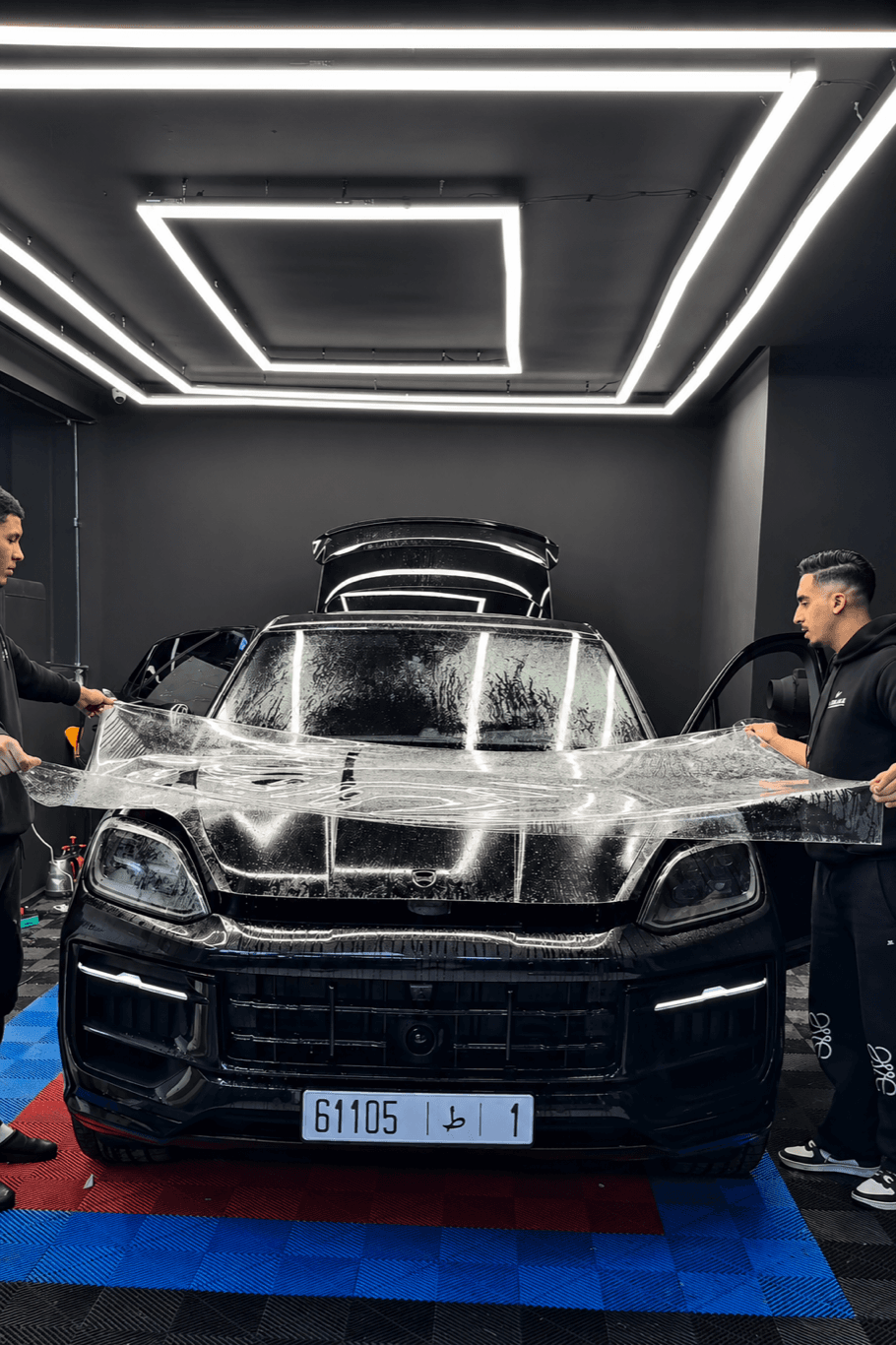
If you have typed “paint protection film Morocco” or “PPF Morocco” into a search bar, chances are you have just found your first stone chip — or you are about to take delivery of a new car and want to avoid that moment altogether. Paint protection film, also called PPF or clear bra, is a transparent, self-healing layer applied over the factory paint to take the damage that Moroccan roads throw at it.
This guide gives Casablanca drivers, expats and visitors straight answers: what the film is, why it earns its place on Moroccan roads, which zones and finishes make sense, what drives the price and how to care for it. It is based on daily work in our Casablanca studio, where 500+ vehicles have already been protected.
What paint protection film actually is
Paint protection film is a clear urethane film — technically thermoplastic polyurethane, or TPU — fitted panel by panel over the paint. The film we install is roughly 8 mil thick, around 205 microns. That is many times thicker than a ceramic coating, and thick enough to absorb gravel impacts that would otherwise chip the clear coat.
Three properties separate a modern PPF from the old protective films that yellowed and cracked:
- Self-healing. Light swirls and fine scratches in the top coat fade away with heat — warm water, or simply a car parked in the Moroccan sun.
- Hydrophobic top coat. Water and dust slide off more easily, so washing is faster and gentler.
- Non-yellowing. UV-stabilised film stays optically clear instead of turning amber after a few summers.
Wherever the panel shape allows, edges are wrapped around its border, so the film line disappears and there is no visible edge to collect dirt.
Clear bra, PPF, film de protection: one product, many names
Americans say “clear bra”, installers say PPF and French-speaking Moroccans say film de protection — locally, people mostly search “PPF Maroc” or “paint protection film Maroc”. All of these describe the same product.
What PPF is not is a vinyl wrap. When people search “wrap car”, they are usually after a colour change with a thinner PVC film, which shields the paint from UV and light scuffs but will not stop a stone chip. Our car wrap guide for Casablanca covers that side in detail.
Why paint protection film in Morocco is worth it
Moroccan driving conditions are hard on paint, and most of the damage comes from sources that no amount of careful driving can avoid:
- Motorway stone chips. At speed on the Casa–Rabat or Casa–Marrakech motorway, gravel thrown up by lorries hits the bonnet, bumper and mirrors like shot.
- Construction sites and loose gravel. New districts and roadworks around Casablanca leave aggregate on the road for months.
- Sun and heat. Strong UV slowly fades paint, especially on the roof and bonnet, and heat bakes on dust, sap and bird droppings.
- Sand, dust and the chergui. Fine grit turns into sandpaper the moment someone wipes it dry.
- Tight car parks. Door dings, bag scuffs and trolley marks are part of city parking.
- Brush car washes. Station brushes leave swirl marks across the paint; film takes that abuse instead.
- Sea air. In Aïn Diab or Dar Bouazza, salty humidity adds to the attack.
There is a financial logic too. Buyers on Avito or Moteur.ma check the original paint first, and on an LLD or LOA lease, chips and scratches can be charged when the car is returned. Film keeps the factory paint intact in both cases.
Which zones to protect
Not every panel faces the same risk. This is how the main areas compare:
| Zone | Main risk in Morocco | What the film does |
|---|---|---|
| Front bumper and bonnet | Stone chips at speed | Absorbs impacts before the clear coat |
| Front wings and mirrors | Gravel, car-park scrapes | Protects edges that chip easily |
| Headlights | Pitting and haze from sand | Keeps the lenses clear |
| Door edges and handle cups | Dings, ring and nail scratches | Takes daily contact marks |
| Rear bumper top | Bags and luggage | Stops loading scratches |
| Roof and bonnet | UV fading | Shields the paint from the sun |
Full-body protection covers every painted panel. It is the natural choice for prestige cars — a Range Rover, a Porsche, a Lamborghini Urus — and for anyone who wants zero compromise. The right scope depends on your car, how you drive and how long you plan to keep it; we go through it with you during the inspection.
Inside the car, interior PPF protects the touchscreens, piano-black consoles and cockpit trims that scratch almost as soon as you look at them, with a 5-year warranty.
Clear, matte or colour: choosing a finish
PPF is no longer only transparent. The four options we fit, with their starting prices:
| Finish | What it does | Durability | Starting price |
|---|---|---|---|
| Clear gloss, full body | Invisible protection, factory look | Lasts up to 10 years | From 19,000 MAD |
| Matte / satin | Turns gloss paint matte, no repaint | 7-year warranty, up to 8 years | From 21,000 MAD |
| Colour PPF | Changes colour and protects | 7-year warranty, up to 8 years | From 35,000 MAD |
| Interior PPF | Screens, piano-black, cockpit | 5-year warranty | From 2,500 MAD |
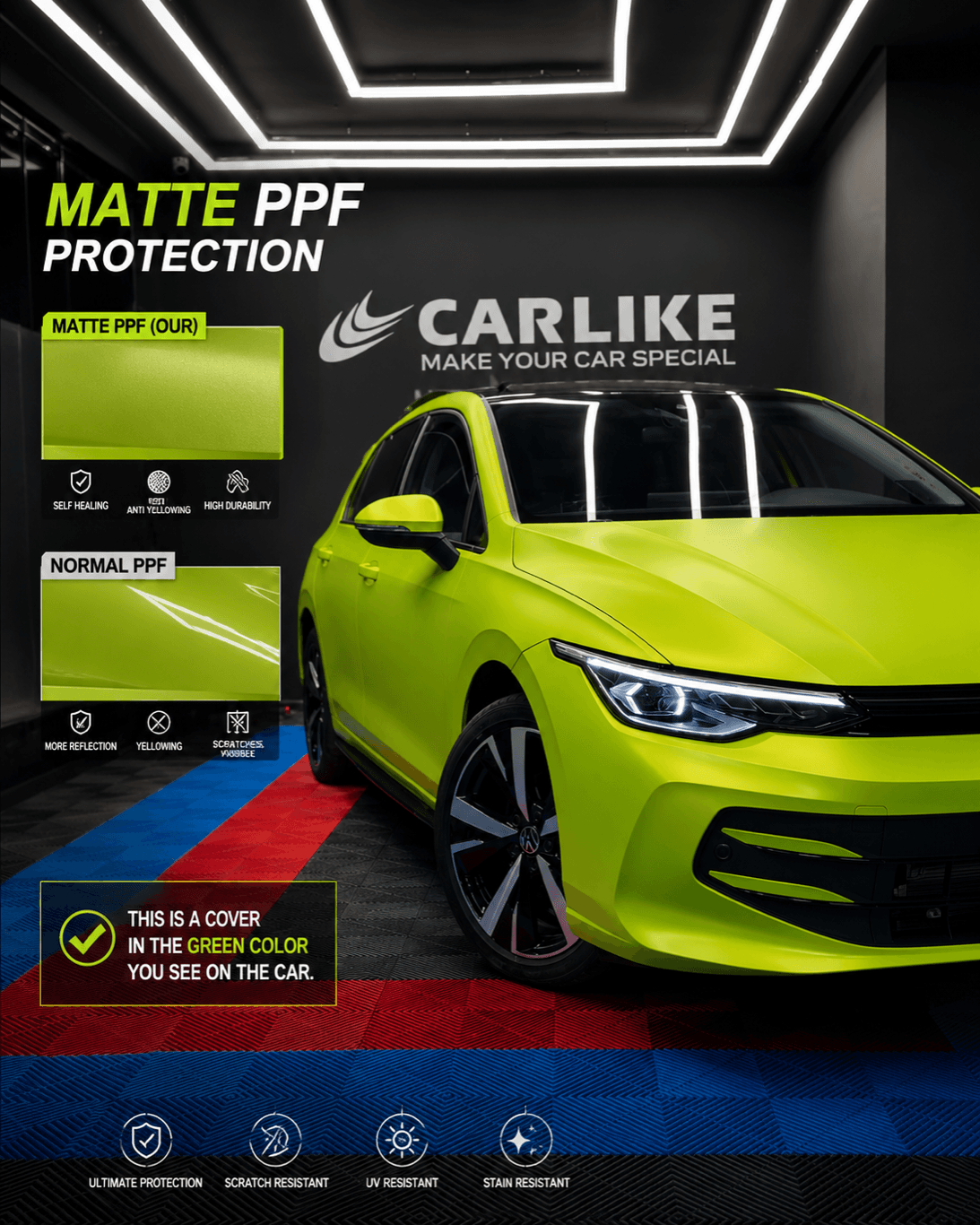
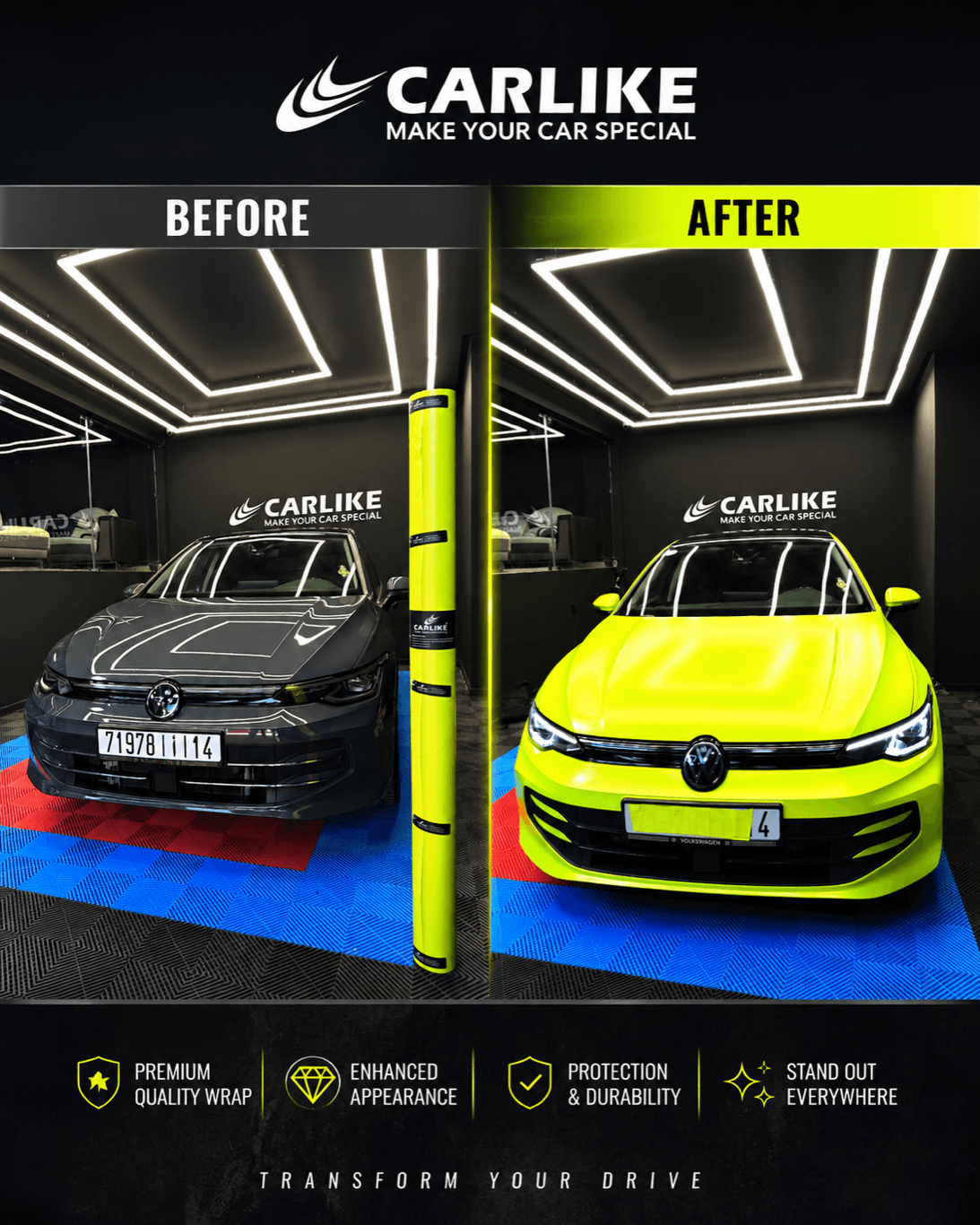
Matte PPF gives the stealth look of factory matte paint without its fragility: matte paint cannot be polished, whereas a damaged panel of film can simply be replaced. Colour PPF goes a step further and changes the colour while protecting. If you are torn between that and a vinyl wrap, our colour PPF vs vinyl wrap comparison explains the difference.
What drives the price of PPF in Casablanca
Quotes you find while researching PPF Casablanca studios can vary a lot, and the reasons are mostly technical:
- Size and shape of the car. A compact hatchback has far less surface and fewer complex curves than a large SUV or a sports car with deep vents.
- Finish. Clear gloss, matte/satin and colour films are different products with different starting prices.
- Coverage. Full body with wrapped edges, or a more targeted set of panels.
- Paint condition. Film magnifies what is underneath, so swirls and scratches should be removed first with polishing and paint correction, from 1,200 MAD.
- Disassembly. Removing badges, handles or lights where needed lets the installer wrap the edges for an invisible finish.
At Carlike, clear full-body PPF starts from 19,000 MAD, with a warranty of 5 to 10 years depending on the film. The exact quote is given after inspecting the car at the studio.
Tip: never put film over damaged paint. PPF is transparent, so every swirl, scratch or chip underneath stays visible — and gets sealed in. A paint correction before installation is what makes the final result look better than new.
How a PPF installation works
A professional installation follows the same sequence every time:
- Inspection and quote. We check the paint and previous repairs, and agree on the zones and finish.
- Wash and decontamination. The car is washed, clayed and degreased so nothing gets trapped under the film.
- Paint correction if needed. Polishing removes swirls before they are sealed in.
- Fitting. Each panel is positioned with a slip solution, squeegeed and stretched into place, edges wrapped where possible.
- Finishing and checks. The film is heat-set and every edge is inspected under studio lighting.
- Handover. You leave with care instructions and your warranty details.
All of this happens in a controlled indoor studio, away from wind and dust, by certified installers. A full-body job generally keeps the car with us for several days; the exact timeline is confirmed at the visit.
Looking after PPF under the Moroccan sun
Film is low-maintenance, but a few habits make a real difference:
- Wait before the first wash — typically around a week, and the installer will confirm — so the film can settle.
- Hand wash with a pH-neutral shampoo, and rinse off sand and dust thoroughly before touching the surface.
- Skip station brush washes; they dull every finish over time.
- Keep a pressure-washer lance at a distance and never aim it straight at film edges.
- Remove bird droppings, tree sap and insects quickly, before the heat bakes them on.
- On matte or satin film, use matte-specific products only: no wax, no polish.
- Park in the shade or under cover when you can.
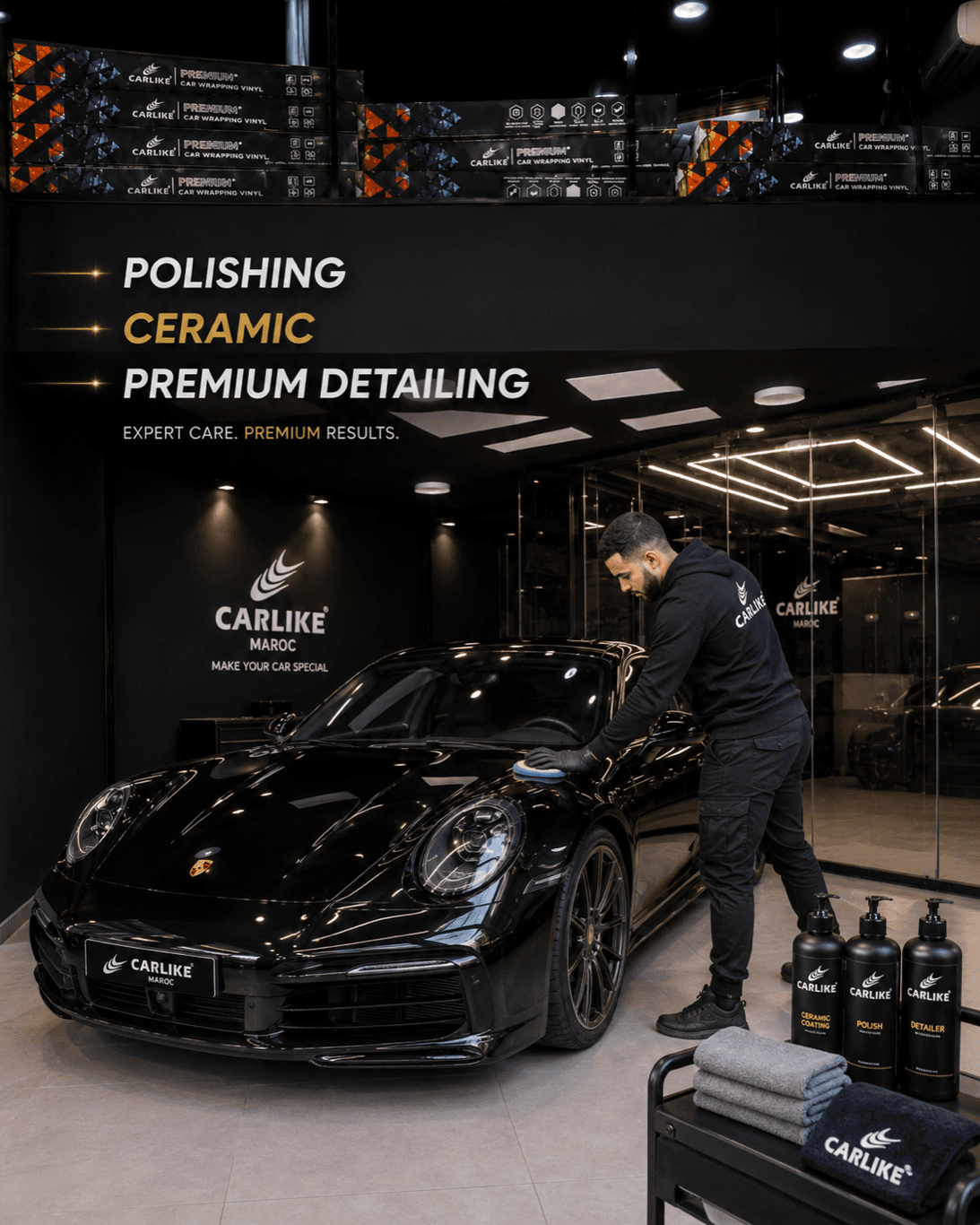
Many owners also add a ceramic coating over the film for an extra hydrophobic layer that makes weekly washes even easier. The two are complementary rather than competing, as explained in our guide to PPF vs ceramic coating in Morocco.
Book your PPF consultation in Casablanca
Our studio is in Casablanca, in the Jnane Californie area on boulevard Ed Daouha, open by appointment Monday to Saturday from 9:00 to 19:00. We also welcome clients driving in from Rabat, Mohammedia, Bouskoura, Dar Bouazza, Marrakech and elsewhere in Morocco.
The simplest way to start is to leave your name and phone number in the short booking form — the team calls you back — or to message us on WhatsApp with a photo of your car. Meanwhile, you can browse the PPF packages and finishes, and if a colour change is also on your mind, compare them with our covering and car wrap options.
Frequently asked questions
At Carlike in Casablanca, clear full-body PPF starts from 19,000 MAD, matte or satin PPF from 21,000 MAD and colour PPF from 35,000 MAD. The final quote depends on the size of the car, the condition of the paint and the finish, and is confirmed after an inspection at the studio.
Clear full-body film lasts up to 10 years, while matte and colour PPF carry a 7-year warranty and last up to 8 years; interior PPF has a 5-year warranty. Hand washing, avoiding brush car washes and parking in the shade help the film reach the top of that range.
Yes. Clear bra is the American name for transparent paint protection film, the same product installers call PPF and French speakers call film de protection. It is a thick, self-healing TPU film, not a vinyl wrap.
On healthy factory paint, a quality film removed professionally with heat comes off cleanly and leaves the original paint protected. Repainted or already damaged panels carry more risk, which is why the paint is checked during the inspection before any installation.
Yes, after a short settling period — typically about a week, confirmed by the installer. Hand washing with a pH-neutral shampoo is best; avoid station brush washes and never aim a pressure washer directly at the film edges.