PPF
Colour PPF vs Vinyl Wrap: The Premium Way to Change Your Car’s Colour
Both change your car’s colour without a respray, but only one also protects the paint. A clear comparison of colour PPF and vinyl wrap — material, protection, lifespan and budget — for Moroccan roads.
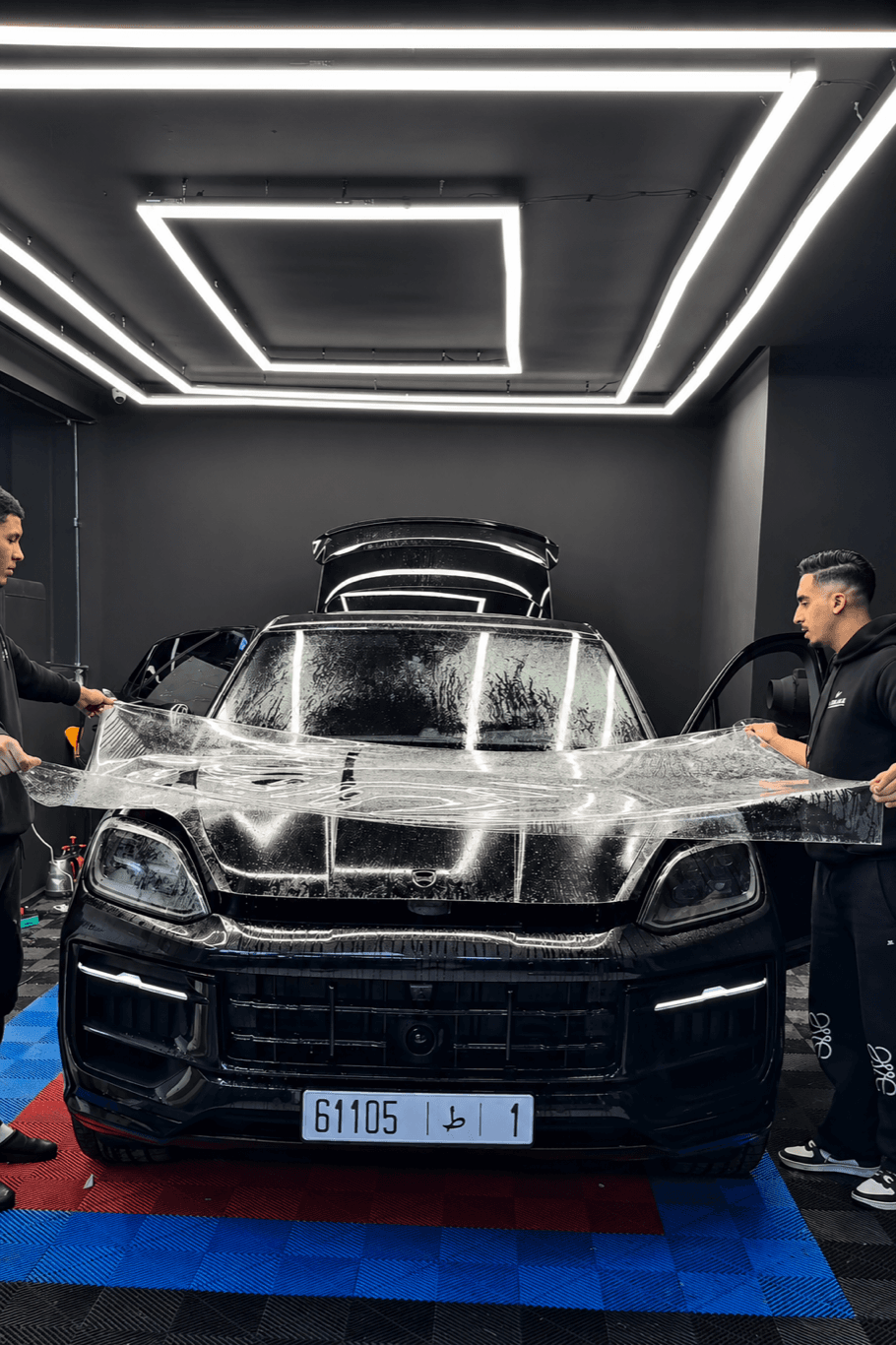
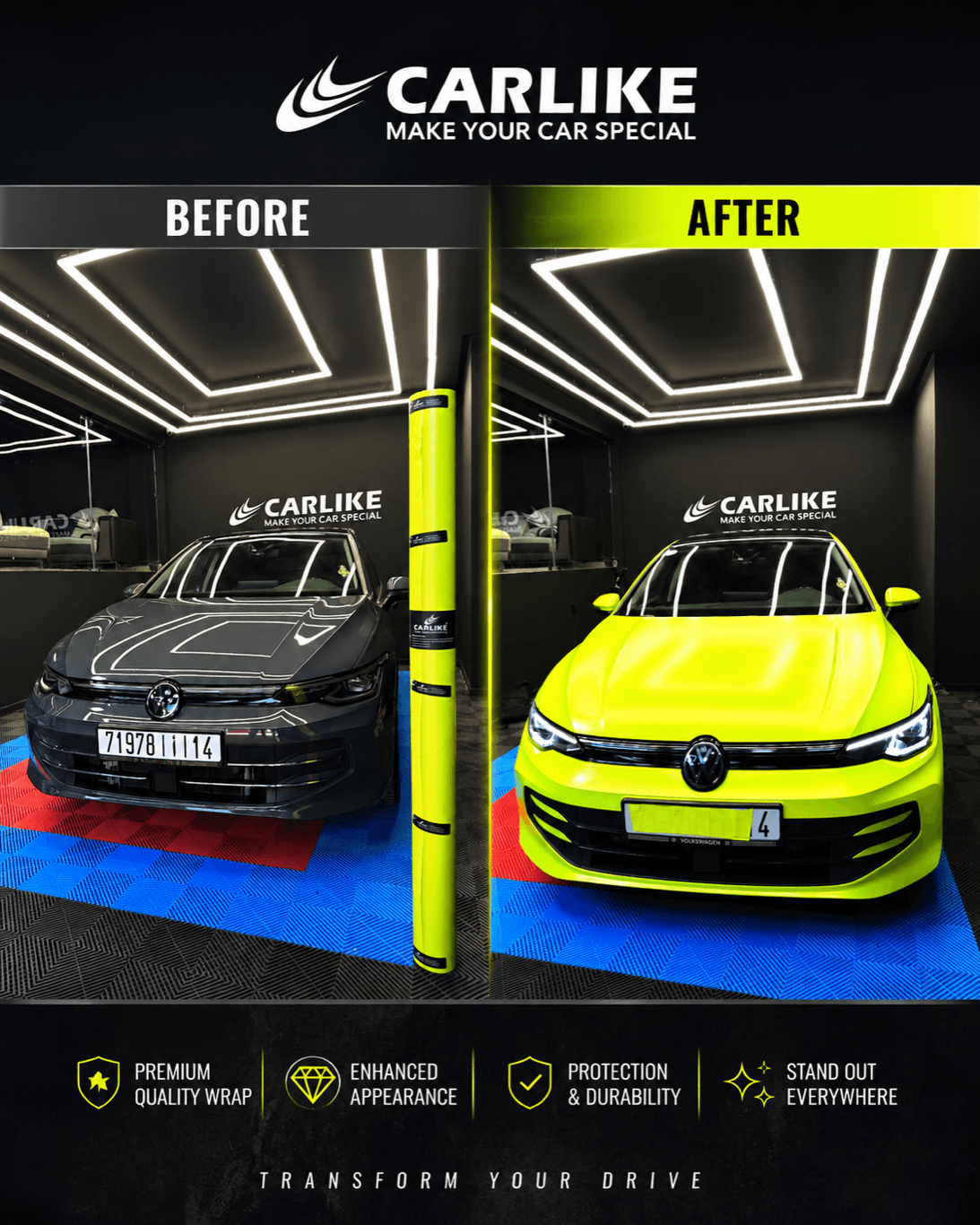
Colour PPF vs vinyl wrap is the choice every owner faces once they decide to change their car’s colour without a respray. Both films come off again, both preserve the factory paint and both look similar on day one. The difference lies in the material — and that decides how the finish ages, whether it stops stone chips and what you pay.
Vinyl wrap has been the standard way to change a car’s colour for years. Colour PPF, often searched with the US spelling “color PPF”, is the newer, premium alternative: a thick, self-healing paint protection film that also carries colour. This guide compares the two honestly, with Moroccan roads and sun in mind, so you can choose with confidence.
TPU vs PVC: two different materials
Almost everything in this comparison comes back to chemistry.
Vinyl wrap is PVC. Cast PVC film is thin — typically around 3 to 4 mil — flexible and available in an enormous range of colours and effects. It stretches with heat and holds its shape once post-heated. It shields the paint from UV and light scuffs, but it has little impact resistance, and a deep scratch in vinyl is permanent.
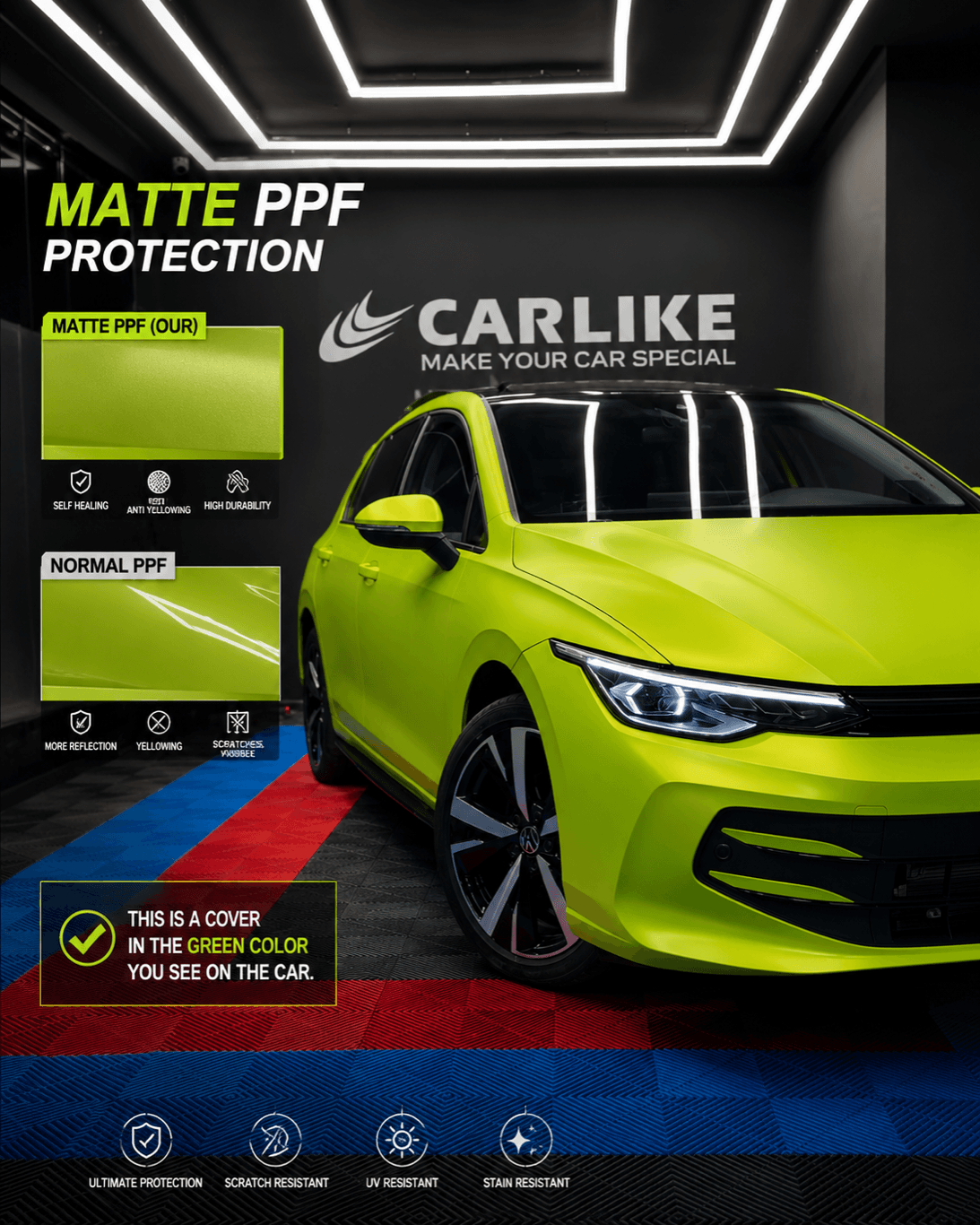
Colour PPF is TPU. Thermoplastic polyurethane is the material of paint protection film. It is much thicker — the films we fit are around 8 mil, roughly 205 microns — elastic rather than simply stretchy, and it carries a self-healing top coat: light scratches and swirls close up with heat. Add colour to that material and you get a colour change with genuine protection built in.
A middle ground: TPU colour films
Some colour films are now made on a TPU base with heat-repair properties, such as the TPU chameleon galactic film in our catalogue. They bring self-healing to a more expressive, colour-shifting look, and are worth asking about at the visit.
Colour PPF vs vinyl wrap side by side
| Criteria | Colour PPF (TPU) | Vinyl wrap (PVC) |
|---|---|---|
| Thickness | About 8 mil (~205 µm) | Typically 3–4 mil |
| Stone-chip protection | Yes, absorbs impacts | Minimal |
| Self-healing | Yes, with heat | No, except TPU-based films |
| Colour choice | Narrower palette | 300+ shades |
| Effects | Mostly solid shades | Gloss, matte, satin, metallic, chrome, chameleon, carbon, glitter |
| Durability | 7-year warranty, lasts up to 8 years | Generally 3–7 years, film and sun dependent |
| Removal | Clean on healthy factory paint | Clean on healthy factory paint |
| Starting price | From 35,000 MAD | 3,500 MAD fixed pack; Original range on quote |
In short, colour PPF trades colour choice and entry price for protection and longevity. Vinyl trades protection for choice and budget control. Neither is “better” in the abstract — it depends on your roads, your car and how long you plan to keep it.
Why colour PPF suits Moroccan roads and sun
Moroccan conditions play to the strengths of TPU:
- Stone chips at motorway speed. Gravel on the Casa–Rabat or Casa–Marrakech motorway can chip a wrap and the paint beneath it; colour PPF absorbs the hit.
- Heat as an ally. The self-healing top coat is heat-activated, so the warmth of a Moroccan afternoon helps light swirls fade. Marks in vinyl, by contrast, stay.
- UV and fading. UV-stable, non-yellowing film keeps its colour and shields the paint underneath.
- Sand and dust. A thicker, tougher surface copes better with fine grit and the occasional imperfect wash, although hand washing remains the rule.
- Tight parking. Scuffs from bags, trolleys and doors in city car parks are absorbed rather than scratched in.
For a prestige car — a Porsche, a Range Rover, a Mercedes, a Tesla — the reasoning often ends here: if you are changing the colour anyway, doing it with a film that also protects is the logical premium choice.
And if what you really want is a matte version of your current colour rather than a new one, matte or satin PPF (from 21,000 MAD) turns gloss paint matte without a repaint. All options are on our paint protection film service page.
When a vinyl wrap is the smarter choice
Vinyl remains the right answer in plenty of cases:
- You want an effect PPF does not offer, such as mirror chrome, strong chameleon shifts, glitter or a carbon texture.
- Budget matters. The Covering Économique pack is a fixed price of 3,500 MAD, and the full Original range is quoted per car and per film.
- The project is partial: a black roof, mirror caps, a bonnet or dechroming.
- You will keep the car for a short time, or it is leased and goes back in a few years.
- You like to change often. Vinyl makes a new look every few years affordable.
For inspiration, look at chrome mirror black, the colour-shifting chameleon electro-metallic matte blue-purple or the deep satin ceramic matte black.
Most people who type “wrap car” into a search engine are thinking of exactly this: vinyl. Our car wrap guide for Casablanca covers costs, finishes and lifespan in detail, and you can browse the full covering range.
Protecting the original paint and your car’s value
Both films preserve the factory paint underneath, which is their big advantage over a respray. On the Moroccan second-hand market — Avito or Moteur.ma listings — original paint is a strong selling point, and a car that returns to its factory colour after removal is generally easier to sell than one that was resprayed.
On an LLD or LOA lease, reversibility matters even more because the car must go back in good condition. A film that absorbs chips (colour PPF) protects the restitution condition better than one that mainly changes the colour (vinyl). Check your lease contract for any rules on modifications first.
Removal is clean on healthy factory paint. Repainted or damaged panels are checked during the inspection, because any film can lift weak paint when it comes off.
Before a full colour change: check whether your carte grise needs to be updated and inform your insurer. Practice can vary, so ask the relevant authority and your insurance company before the project.
How to decide: five questions
- Do you drive the motorway often? Frequent stone chips point to colour PPF.
- Is a specific effect non-negotiable? Chrome, chameleon or glitter point to vinyl.
- How long will you keep the car? The longer the ownership, the more the longevity of PPF pays off.
- What is your budget? Compare colour PPF from 35,000 MAD with the fixed 3,500 MAD pack or an Original-range quote.
- Do you want protection without any colour change? Then clear PPF is the answer, explained in our paint protection film guide for Morocco.
Caring for colour PPF and vinyl
The routine is almost the same for both films:
- Hand wash with a pH-neutral shampoo and rinse off sand before touching the surface.
- Avoid station brush washes, whichever film you choose.
- On matte and satin finishes, use matte-specific products: no wax, no polish.
- Clean bird droppings and sap quickly in summer heat.
- Keep the pressure washer at a distance and never aim at the edges.
- Park in the shade when you can — it helps both films, vinyl most of all.
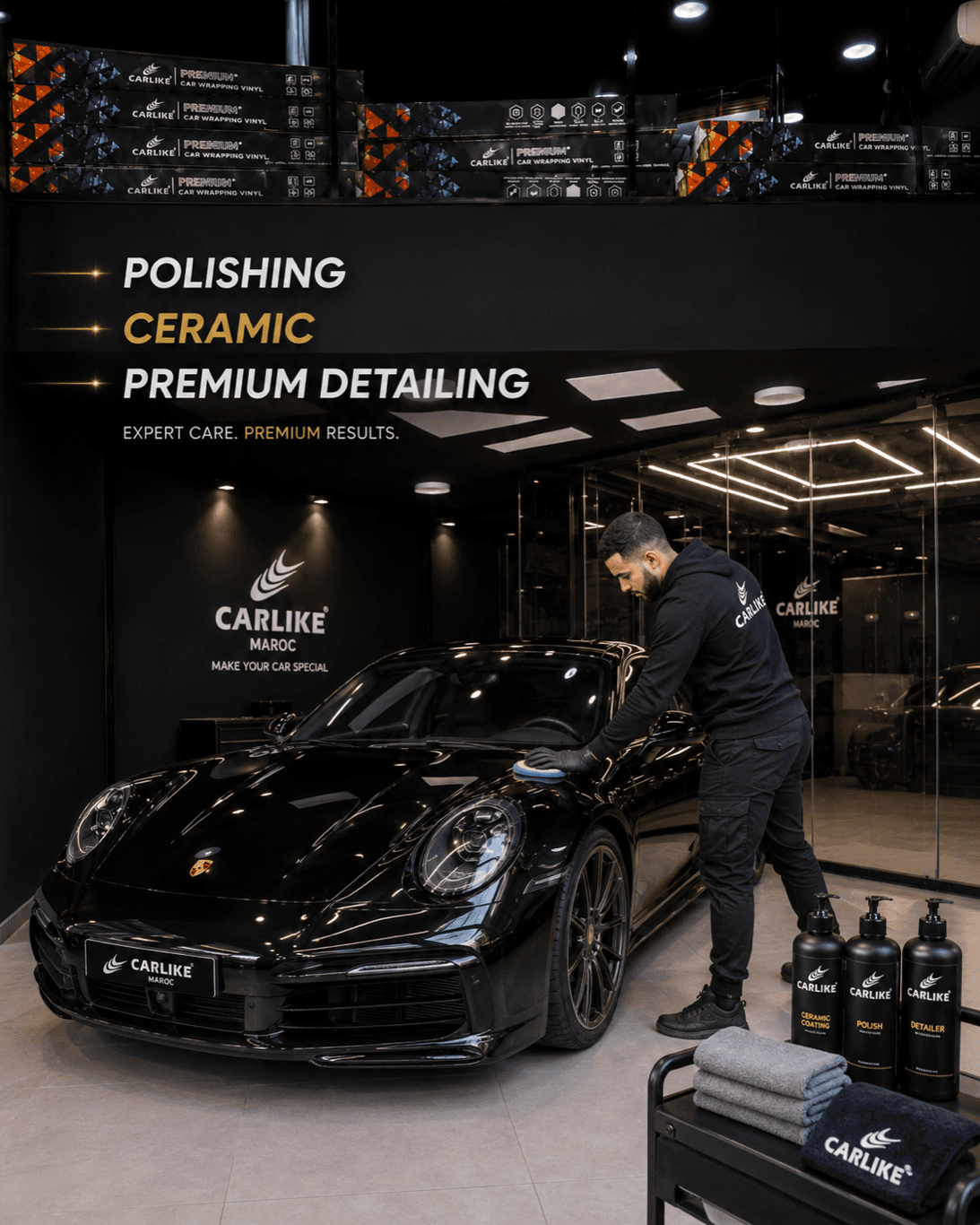
A coating suited to film can make washing even easier; ask about polishing and ceramic options during your visit.
See the colour on your car first
Colour is personal, and a swatch never tells the whole story. On our covering page you can upload a photo of your own car and see a shade on it with the AI preview, or send the photo on WhatsApp.
Whether you found us by searching “PPF Casablanca” or “wrap car”, the next step is the same: a visit to our studio in the Jnane Californie area, boulevard Ed Daouha, by appointment Monday to Saturday from 9:00 to 19:00. Leave your name and phone number in the short booking form and the team calls you back.
Frequently asked questions
Colour PPF is a thick TPU paint protection film that changes the colour and also absorbs stone chips and self-heals light scratches. A vinyl wrap is a thinner PVC film that changes the colour and shields the paint from UV and light scuffs, but offers little impact protection.
If you drive the motorway often, keep your cars for several years or own a prestige model, colour PPF usually justifies its higher price through protection and longevity. For a short-term change, a partial project or special effects like chrome, vinyl is often the better fit.
At Carlike, colour PPF carries a 7-year warranty and lasts up to 8 years. A vinyl wrap generally lasts 3 to 7 years depending on the film and sun exposure.
Full-body colour PPF starts from 35,000 MAD at Carlike. The final quote depends on the size of the car, the paint condition and the chosen shade, and is confirmed after an inspection at the studio.
Yes, on healthy factory paint both come off cleanly when removed professionally, revealing the original colour. Repainted or damaged panels carry more risk, which is why the paint is checked before installation.