Detailing
PPF vs Ceramic Coating in Morocco: Which Protection Does Your Car Need?
Paint protection film and ceramic coating are not two versions of the same thing. Here is what each one really does against stone chips, sun and dust, and when it makes sense to combine them.
PPF vs ceramic coating is one of the first questions owners ask once they decide to protect a new or freshly polished car. Both promise shine and easier cleaning, both are sold as “protection”, and their prices sit far apart — so it is tempting to think one is simply a premium version of the other. It is not.
Paint protection film is a physical shield that absorbs impacts. Ceramic coating is a chemical layer that makes the paint glossier, more water-repellent and easier to keep clean. In Morocco, where cars face motorway stone chips, sand in the air and a hard summer sun, knowing exactly what each one does is the difference between money well spent and disappointment. Here is the honest comparison from our Casablanca studio.
PPF vs ceramic coating at a glance
| Criteria | Paint protection film (PPF) | Ceramic coating |
|---|---|---|
| What it is | Thick TPU film fitted over the paint | Liquid that cures into a thin, hard layer |
| Thickness | Around 8 mil (about 205 µm) | Only a few microns |
| Stone chips | Absorbs them | No real protection |
| Fine scratches, swirls | Self-heals with heat | Some resistance, no healing |
| UV and fading | UV-stable, non-yellowing film | Slows oxidation |
| Bird droppings, stains | Film takes the hit | Buys time to clean |
| Water and dust | Hydrophobic top coat | Strongly hydrophobic |
| Look | Factory gloss, or matte / colour | Extra depth and gloss |
| Lifespan | Up to 10 years for clear full body | Depends on product and upkeep |
| Starting price | From 19,000 MAD (full body) | From 3,500 MAD |
The short version: film is about preventing damage, coating is about keeping the paint beautiful and easy to clean. The rest of this guide explains why, and how to choose.
Ceramic coating in Casablanca: what it does well
A ceramic coating is a liquid, usually silica-based, applied by hand on perfectly clean, corrected paint. It bonds to the clear coat and cures into a hard, glassy layer. The benefits are real, especially in a dusty city:
- Strong water beading. Rain and rinse water roll off, taking dust with them.
- Easier washing. Sand, dirt and brake dust release with less rubbing, which means fewer wash-induced swirls.
- Extra gloss and depth. Particularly striking on black, dark blue or deep red paint.
- Chemical resistance. More time to remove bird droppings or tree sap before they etch the clear coat.
- UV resistance. It slows the oxidation that dulls paint under strong sun.
What ceramic cannot do
A layer a few microns thick cannot stop a stone travelling at motorway speed, a key scratch or a trolley scraping the door. The “9H hardness” printed on many coating bottles refers to a pencil scratch test on the coating itself, not to impact resistance. If anyone promises stone-chip protection from a coating alone, be sceptical.
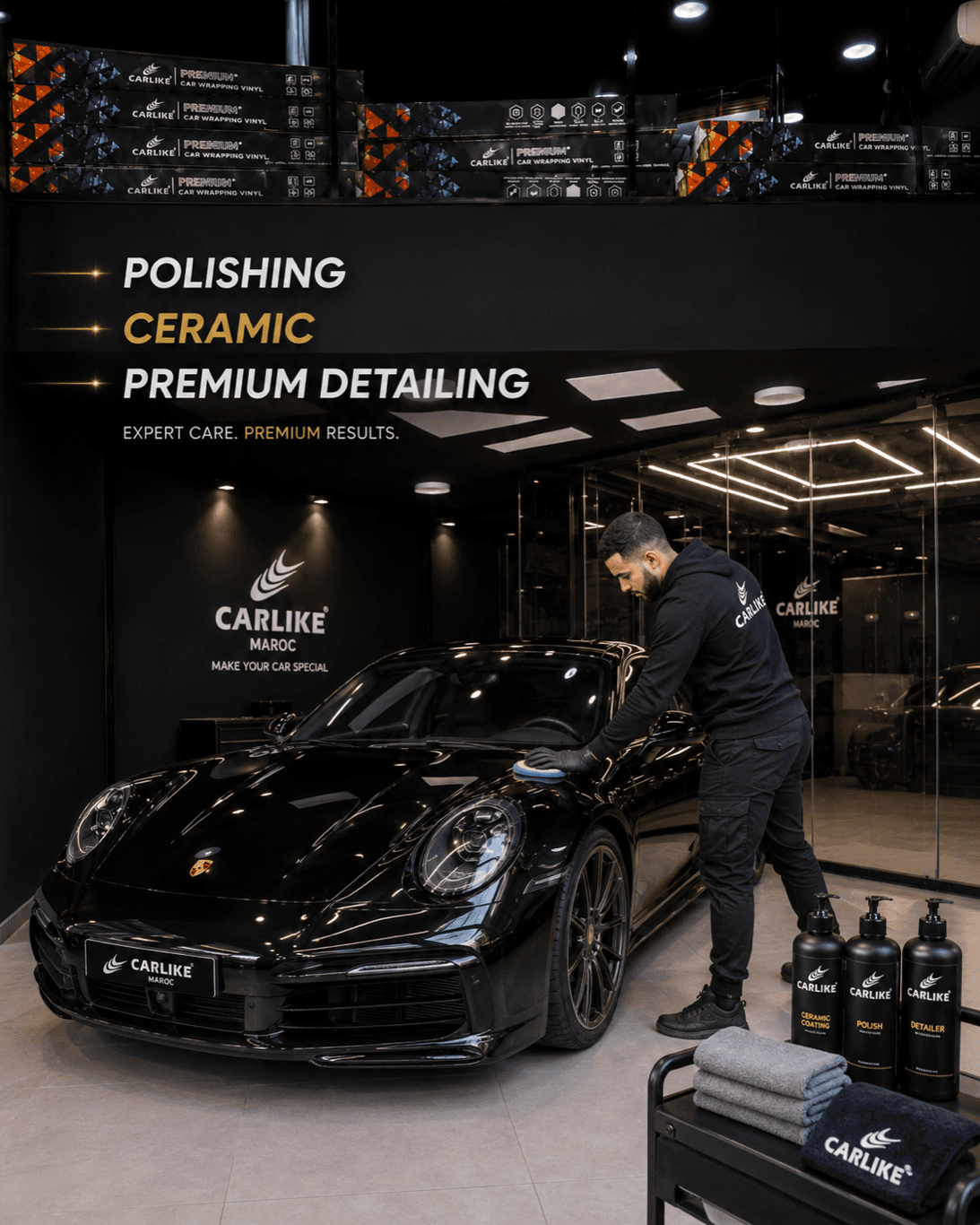
A coating also magnifies whatever is underneath, so the paint has to be corrected first. That is why a ceramic coating normally follows a proper polishing and paint correction session, from 1,200 MAD.
What PPF does that ceramic cannot
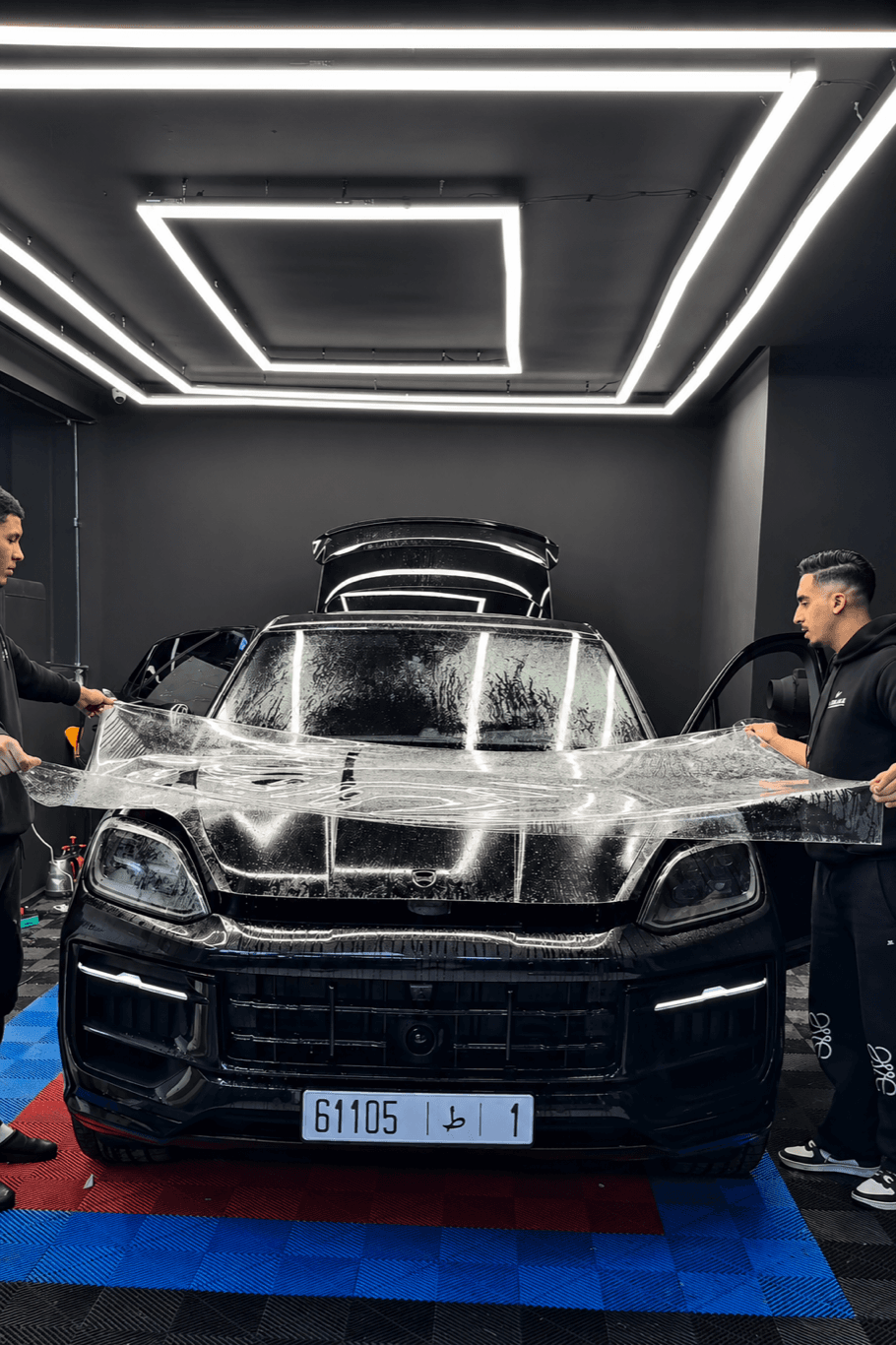
Paint protection film works on a different principle: thickness. Around 8 mil of thermoplastic polyurethane sits between the road and your clear coat, so a gravel impact marks the film instead of chipping the paint.
- Stone-chip protection on the bonnet, bumper and mirrors, the areas that suffer most on the Casa–Rabat and Casa–Marrakech motorways and around construction sites.
- Self-healing. Light swirls and fine scratches in the top coat fade with heat, and the warmth of a Moroccan afternoon is often enough for minor marks.
- Scuff resistance in tight Casablanca car parks.
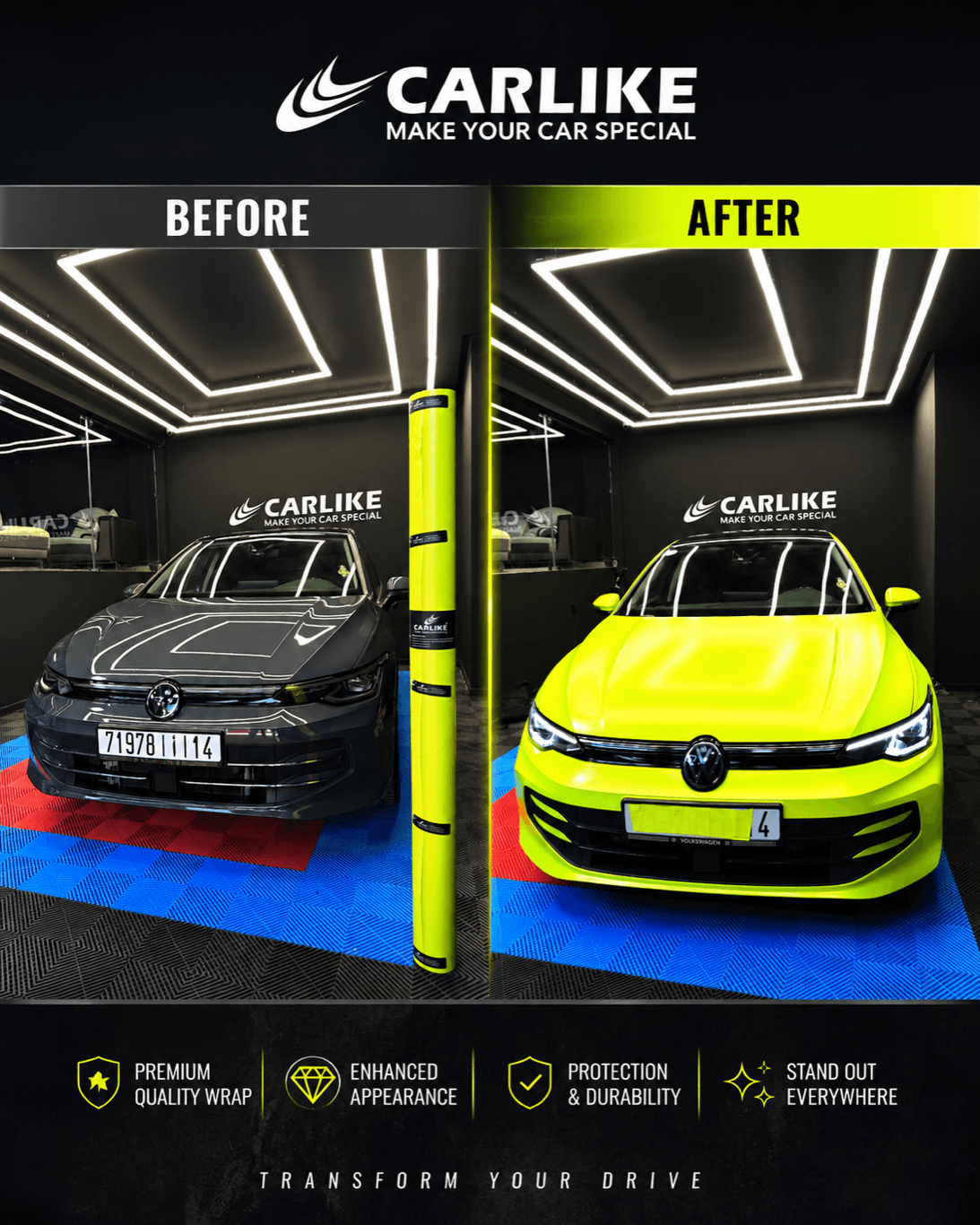
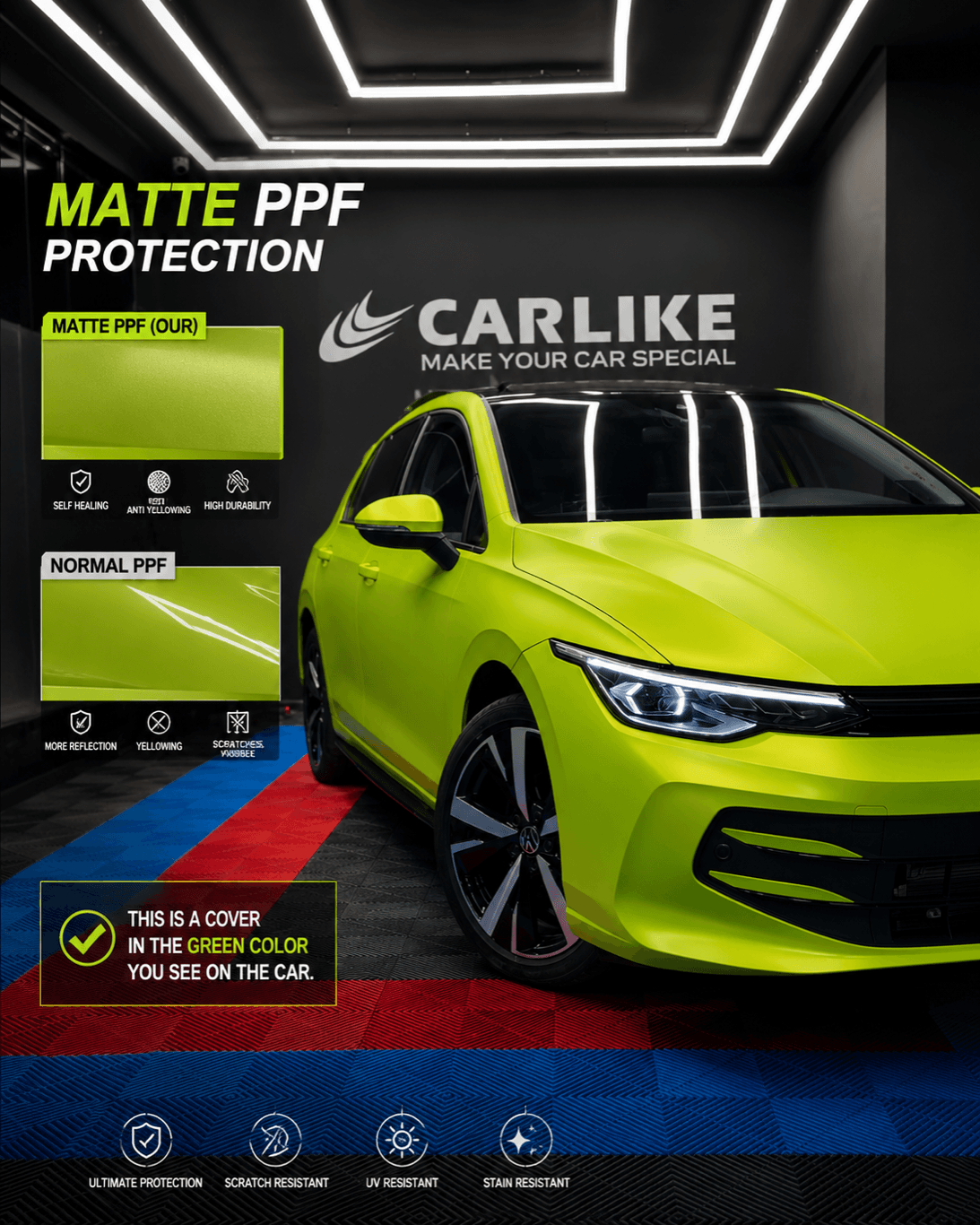
- Finish options. Clear gloss, matte or satin PPF (from 21,000 MAD) to turn gloss paint matte without repainting, or colour PPF.
- Long service life. Up to 10 years for clear full-body film, with a warranty of 5 to 10 years depending on the film.
Our complete guide to paint protection film in Morocco goes deeper into zones, finishes and installation.
Which one fits your car and your driving?
The right answer depends less on the car’s price than on the damage you want to avoid:
| Your situation | Best fit | Why |
|---|---|---|
| New prestige car (Porsche, Range Rover, Urus) | PPF, ideally with ceramic on top | Protects the paint and the value |
| Daily Casa–Rabat or Casa–Marrakech motorway | PPF on the exposed zones at least | Stone chips are the main threat |
| City driving, covered parking | Ceramic coating | Gloss and easy washing come first |
| Leased car (LLD/LOA) | PPF | Restitution condition matters |
| Older car with swirls | Polishing, then ceramic | Restores gloss, then keeps it |
| Matte look wanted | Matte PPF | No repaint, fully reversible |
If you are still unsure, ask yourself one question: what do I want to stop? If the answer is chips and scratches, only film does that. If it is dull paint and long washing sessions, a coating is the efficient answer.
Combining both: ceramic coating over PPF
The two are not rivals. On many high-end cars the best result is PPF on the paint, then a ceramic coating over the film and any unfilmed surfaces. The film absorbs the impacts; the coating makes the whole car bead water, shed dust and wash faster — useful in a city where a fresh layer of dust can settle within a day.
The sequence matters:
- Wash and decontaminate the car.
- Correct the paint so no defect gets sealed in.
- Install the PPF and let it settle.
- Apply a coating suited to film surfaces on top.
The order is not optional: correct, then film, then coat. A coating applied to the paint first can compromise the adhesion of film laid over it, and a coating used on PPF should be one designed for film — ask about it during the inspection.
Cost and lifespan: comparing fairly
Price comparisons between PPF and ceramic are misleading unless you compare what each one prevents. Ceramic coating starts from 3,500 MAD; full-body clear PPF starts from 19,000 MAD. The gap reflects material and labour: a coating is a hand-applied liquid, while film is positioned, stretched and edge-wrapped panel by panel, which takes considerably longer.
What changes the final quote:
- The size of the car and the complexity of its panels.
- The condition of the paint and the level of correction it needs.
- For PPF: the finish (clear, matte/satin from 21,000 MAD, colour from 35,000 MAD) and the coverage.
- For ceramic: the surfaces treated and the preparation required.
On lifespan, clear full-body film lasts up to 10 years. Ceramic coatings vary widely with the product and, above all, with maintenance: brush car washes and harsh detergents wear them down much faster. Ask for the expected durability of the specific coating at the visit rather than trusting a generic number.
Maintenance under Moroccan sun and dust
Whichever you choose, the same habits protect your investment:
- Rinse thoroughly before touching the car — sand is abrasive, film or no film.
- Hand wash with a pH-neutral shampoo and skip station brush washes.
- Dry with a clean microfibre towel, never a cloth dragged across dusty paint.
- Remove bird droppings and sap promptly; heat speeds up etching.
- On matte PPF, no wax and no polish.
- Treat the car to a premium wash at the studio (from 400 MAD) now and then as a reset between home washes.
One more distinction worth making: people who search “wrap car” are usually after a colour change, not protection. That is vinyl, a third product with its own trade-offs — see our car wrap guide for Casablanca and the covering service.
Get the right protection for your car
Whether you searched for “ceramic coating Casablanca” or “PPF Casablanca”, the right answer starts with looking at your paint. Bring the car to our studio in the Jnane Californie area, boulevard Ed Daouha, open by appointment Monday to Saturday from 9:00 to 19:00. We inspect the paint with you, explain what PPF, ceramic or both would change, and give you a clear quote.
You can compare all PPF finishes and packages online first. Then book through the short form — just your name and phone number, and the team calls you back — or message us on WhatsApp.
Frequently asked questions
They do different jobs. PPF is a thick film that absorbs stone chips and self-heals light scratches, while ceramic coating is a thin chemical layer that adds gloss and makes cleaning easier but does not stop impacts.
Yes, and it is a popular combination: the film absorbs impacts and the coating makes the surface more hydrophobic and easier to wash. The coating should be one designed for film surfaces and is applied after the PPF has been installed.
No. A ceramic coating is only a few microns thick, so it cannot absorb a stone hitting the paint at motorway speed. For chip protection you need paint protection film.
At Carlike, ceramic coating starts from 3,500 MAD. If the paint needs polishing or correction first, that starts from 1,200 MAD, and the exact quote is given after an inspection.
It depends on the product and above all on maintenance. Sun, dust and brush car washes shorten its life, while regular hand washing with a pH-neutral shampoo helps it last much longer.